Wednesday, December 11, 2013

TASK 5-6: SELF-PROJECT

The Silent Poison

In this entire task, I need to create a small campaign according to my theme and I need to shoot a series of 10 images that applies all photography techniques that are taught throughout the year.

Theme: The Silent Poison
Subject Matter: Alcohol, cigarette,
Main Objective: To tell public the effect of taking this silent poison
Model: Safuan
When I Shooting: 12 December 2013


Description:
Alcohol and cigarette. Two silent poison that always taken by someone for releasing tension but at the same time this two things is killing them slowly, by taking this two things a relationship can be destroyed. for example when the husband just got back from work and stress because work, life problem and taking alcohol and cigarette and went home and releasing tension to wife, and make a relationship divorce, besides that, the alcohol and cigarette hazardous.


Figure 1: The Silent Poison

TASK 4: STRANGERS

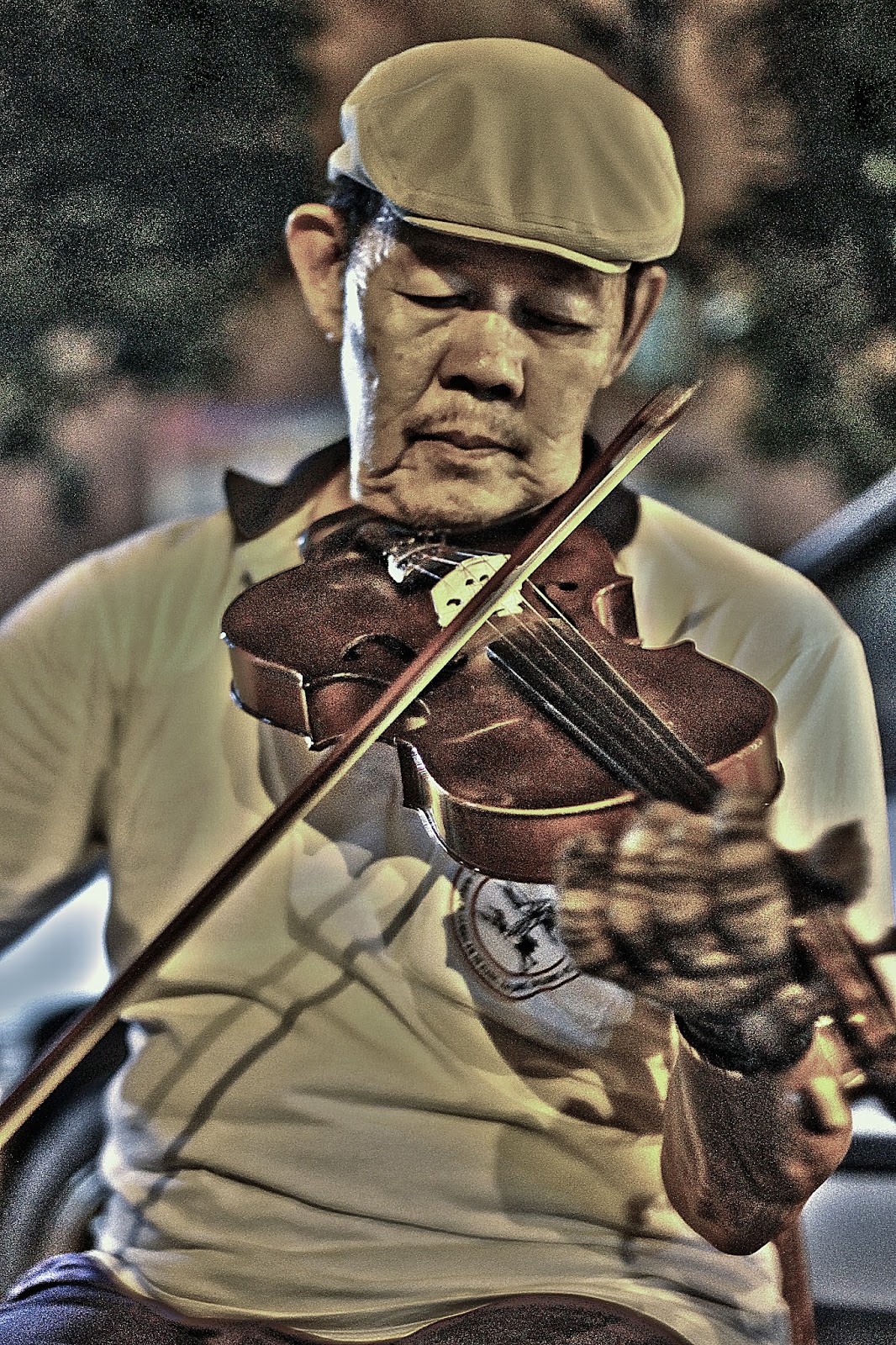
Street Entertainer:

Artist: Mr. Violin Man
My Assistant: Mohammad Safuan, Herry
Shooting Location: Mantin, Negeri Sembilan
When I Shooting: 11 December 2013

In this task, I need to find a stranger and introduce them to other people. I was visited one of the Street Entertainer and we call him Mr.Violin Man. I have also interview with him at Mantin night market . At the same time I also need to capture a total of 10 images about her. I am very grateful to say thank you to him.

Description:
He was born at Melaka on March 1951. He is currently doing full time playing violin at night market to bear his own life, He's playing and learn violin at age 26 until now. 


Figure 1: Playing violin 


Figure 2: Playing Violin

Monday, December 9, 2013

TASK 3: CINEMA

Story line

The life of a young college student in love but are restricted by their parents
A woman in a depression because of the Ever had left, suddenly he was at odds with the man rebuked him and make him smile dazzled and, by chance they met at an ATM machine and she is rebuked college guys first to comment he quickly became fond of the man, and he makes them smile and joke and laugh together. The man with her ​​first love thus came to her and begins to express the love act at a hut where she learned, the man started staring at her, she admonished the men, and they smile and laugh, they met a month they have already fallen in love and they are happy.
But their love has been hindered by the old man as the old man did not like her making love during the times of the campus. And they talk about their relationship, the man had had to leave the matter, she was really upset, and he expresses his or her relationship with the man to his housemate, she prayed to God about their relationship, but someone unknown to all people about the disease proceedings of the woman’s face and he died after he prayed. Man -being in love with the feeling of regret for the death of her and she felt guilty, and the man lives alone.


Figure 1: Cinema (Love story)

Monday, November 25, 2013

TASK 2: HDR TONING

We need to capture a total of 5 images that applies the HDR technique according to the theme. My theme is Hill landscape. Hill is a land form. 

What is HDR?
High-dynamic-range imaging (HDRI or HDR) is a set of methods used in imaging and photography to capture a greater dynamic range between the lightest and darkest areas of an image than current standard digital imaging methods or photographic methods.
HDR images can represent more accurately the range of intensity levels found in real scenes, from direct sunlight to faint starlight, and is often captured by way of a plurality of differently exposed pictures of the same subject matter.

Why tripod is important?
By using a tripod can help me to get the absolute most detail for my HDR images. If me do not use a tripod, I will not get the same results and quality when compared to using a tripod.

Theme: HDR Hill Landscape
Shooting Location: Broga Hill, Semenyih,Selangor


Figure 1: HDR toning


Figure 2: HDR toning


Figure 3: HDR toning


Figure 4: HDR toning


Figure 5: HDR toning


Figure 6: HDR toning


Figure 7: HDR toning


Figure 8: HDR toning


Figure 9: HDR toning


Figure 10: HDR toning


Figure 11: HDR toning


Figure 12: HDR toning


Figure 13: HDR toning

Saturday, November 2, 2013

DESIGN BOARD SCRABBLE

Using adobe illustrator cs 6 for design the board, first sketch the design, after that put in computer and design use adobe illustrator and using pen tool and sketch design.


Figure 1: Sketches design board


Figure 2: using pen tool for design


Figure 3: Finish design using pen tool


Figure 4: final outcome design Board


MAKING PROCESS FOR PACKAGING LAYOUT DESIGN

Using adobe Photoshop Cs 6 for design the packaging game. Using plywood for make the packaging with my own design.


Figure 1: sketches packaging design


Figure 2: final outcome packaging design

Sunday, October 27, 2013

Game Research


History of Scrabble
Scrabble

Figure 1:  Scrabble         
Scrabble is a word game in which two to four players score points by placing tiles, bearing a single letter, onto a game board which is divided into a 15×15 grid of squares. The tiles must form words which, in crossword fashion, flow left to right in rows or downwards in columns. The words must be defined in a standard dictionary. Specified reference works provide a list of officially permissible words. The name Scrabble is a trademark of Hasbro, Inc. in the United States and Canada; elsewhere, it is trademarks of homes have a Scrabble set.  The name of the game spelled out in game tiles from the English language version. Each tile is marked with their point value, with a blank tile the game's equivalent of a wild card played as the word first letter. The blank tile is worth Mattel. The game is sold in 121 countries and is available in 29 languages; approximately 150 million sets have been sold worldwide and roughly one-third of American.

In an English-language set the game contains 100 tiles, 98 of which are marked with a letter and a point value ranging from 1 to 10. The number of points of each lettered tile is based on the letter's frequency in Standard English writing commonly used letters such as E or O are worth one point, while less common letters score higher, with Q and Z each worth 10 points. The game also has two blank tiles that are unmarked and carry no point value. The blank tiles can be used as substitutes for any letter; once laid on the board, however, the choice is fixed. Other language sets use different letter set distributions with different point values. Tiles are usually made of wood or plastic and are 19 by 19 millimeters (0.75 × 0.75 in) square and 4 mm (0.16 in) thick, making them slightly smaller than the squares on the board. Only the rosewood tile of the deluxe edition varies the width up to 2 mm (0.08 in) for different letters. Travelling versions of the game often have smaller tiles (13 × 13 mm (0.51 × 0.51 in) sometimes they are magnetic to keep them in place. The capital letter is printed in black at the centre of the tile face and the letter's point value printed in a smaller font at the bottom right corner. In 1938, American architect Alfred Mosher Butts created the game as a variation on an earlier word game he invented called Lexiko. The two games had the same set of letter tiles, whose distributions and point values Butts worked out by performing a frequency analysis of letters from various sources including The New York Times. The new game, which he called "Criss-Crosswords," added the 15×15 gameboard and the crossword-style game play. He manufactured a few sets himself, but was not successful in selling the game to any major game manufacturers of the day. In 1948, James Brunot, a resident of Newtown, Connecticut  and one of the few owners of the original Criss-Crosswords game  bought the rights to manufacture the game in exchange for granting Butts a royalty on every unit sold. Though he left most of the game (including the distribution of letters) unchanged, Brunot slightly rearranged the "premium" squares of the board and simplified the rules, he also changed the name of the game to "Scrabble", a real word which means "to scratch frantically". In 1949, Brunot and his family made sets in a converted former schoolhouse in Dodging town, a section of Newtown. They made 2,400 sets that year, but lost money. According to legend, Scrabble's big break came in 1952 when Jack Straus, president of Macy's, played the game on vacation. Upon returning from vacation, he was surprised to find that his store did not carry the game. He placed a large order and within a year, "everyone had to have one. In 1952, unable to meet demand himself, Brunot sold manufacturing rights to Long Island-based Selchow and Righter, one of the manufacturers who, like Parker Brothers and Milton Bradley Company, had previously rejected the game. In its second year as a Selchow and Righter-built product, nearly four million sets were sold. Selchow and Righter bought the trademark to the game in 1972. JW Spears began selling the game in Australia and the UK on January 19, 1955. The company is now a subsidiary of Mattel. In 1986, Selchow and Righter was sold to Coleco, who soon after went bankrupt. The company's assets, including Scrabble and Parcheesi, were purchased by Hasbro. In 1984, Scrabble was turned into a daytime game show on NBC. Scrabble ran from July 1984 to March 1990, with a second run from January to June 1993. The show was hosted by Chuck Woolery. The tagline of the show in promo broadcasts was, "Every man dies; not every man truly scrabbles. In 2011, a new TV variation of Scrabble, called Scrabble Showdown, aired on The Hub cable channel, which is a joint venture of Discovery Communications and Hasbro.